

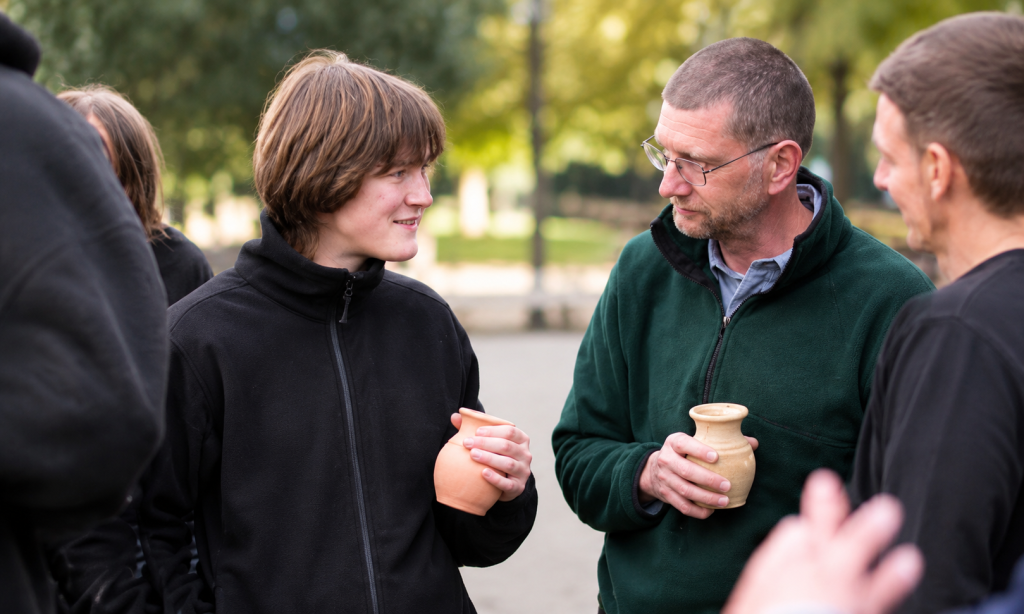
Helen Geake is a British archaeologist, small finds specialist and early medieval expert best known to many viewers through her appearances on the archaeology television series Time Team. In the professional archaeology world, she is also widely recognised for her work with the Portable Antiquities Scheme, where her expertise in Anglo-Saxon and early medieval objects has helped shape the understanding of many important finds from England’s past.
The search term “Helen Geake archaeologist” often comes from people who remember her from television and want to know more about her academic background, specialist field, career path and contribution to British archaeology. Unlike many TV personalities who become known mainly through broadcasting, Helen Geake’s public profile is built on a strong professional foundation. Her reputation comes from years of serious archaeological work, especially in the study of artefacts, grave goods, burial practices and early medieval material culture.
Her career connects several important areas of archaeology: academic research, museum work, finds recording, public education and television communication. This makes her a notable figure not only for archaeology students and history enthusiasts, but also for general audiences who became interested in the subject through programmes such as Time Team.
Early Interest in Archaeology
Helen Geake’s route into archaeology was shaped by curiosity, reading and exposure to inspiring lectures. She developed a strong interest in the past and eventually pursued formal study in archaeology. Her academic journey led her to focus on medieval and Anglo-Saxon archaeology, an area that would later become central to her career.
Anglo-Saxon archaeology is a field that explores the period after Roman rule in Britain and before the Norman Conquest. It includes settlements, cemeteries, churches, jewellery, weaponry, tools, coins and everyday objects. For many people, this period can seem distant or difficult to understand because written evidence is limited compared with later centuries. That is why artefacts are so important. Objects recovered from the ground can reveal details about identity, trade, belief, status, craft, migration and cultural change.
Helen Geake’s work has often focused on exactly these kinds of questions. Her interest in small finds and burial evidence helped her become an expert in how objects can be interpreted within wider historical and social contexts.
Education and Academic Background
Helen Geake studied archaeology at university level and became especially associated with the study of Anglo-Saxon cemeteries and grave goods. Her doctoral research focused on the use of grave goods in conversion-period England, roughly covering the years from around 600 to 850 AD.
This was a highly important period in English history. It was a time when Christianity was spreading through Anglo-Saxon England, changing burial customs, religious identity and social practices. Grave goods — the objects placed with the dead — can tell archaeologists a great deal about how communities understood status, memory, belief and the afterlife.
Her research into conversion-period grave goods is one of the key reasons Helen Geake is respected as an Anglo-Saxon specialist. The subject requires careful analysis because grave goods cannot be interpreted in a simple way. A brooch, weapon, bead, vessel or tool found in a grave may reflect personal identity, family status, regional custom, religious belief or social display. Understanding those meanings takes both technical knowledge and historical sensitivity.
Career in Archaeology
Helen Geake has worked across several respected archaeological settings, including museum and finds-related roles. Her career includes experience at Norwich Castle Museum and long-term work with the Portable Antiquities Scheme.
The Portable Antiquities Scheme is an important programme in England and Wales that records archaeological objects found by members of the public, including metal detectorists. Its work helps ensure that discoveries outside formal excavations are documented properly and made useful for research. Without this kind of recording, many objects could disappear into private collections without adding to public knowledge.
As a finds specialist, Helen Geake’s role has involved identifying, interpreting and advising on artefacts, especially early medieval material. This is highly skilled work. A small object may appear ordinary to a casual observer, but an expert can often identify its period, use, style, material, cultural context and possible significance.
Her knowledge of early medieval artefacts has helped connect individual discoveries to broader archaeological questions. These questions may include how people dressed, how they expressed religious identity, how trade networks worked, how communities interacted and how burial customs changed over time.
Work with the Portable Antiquities Scheme
A major part of Helen Geake’s professional identity is linked to the Portable Antiquities Scheme. Through this work, she has helped bridge the gap between public discovery and academic archaeology.
The PAS relies on careful recording. When an object is found, details such as location, material, measurements, decoration and date range can all matter. Over time, thousands of recorded objects create patterns that help researchers understand settlement, trade, craft production and regional variation.
Helen Geake’s expertise as an early medieval finds adviser has been particularly valuable because Anglo-Saxon objects can be complex. Styles changed over time, and many artefacts require comparison with known examples. Decorative patterns, metalwork techniques and object forms can all provide clues.
Her work also shows why small finds matter. Archaeology is not only about famous monuments, royal tombs or dramatic excavations. Sometimes a tiny brooch fragment, strap-end, pin, bead or mount can add a new piece to the historical puzzle. Specialists like Helen Geake help turn these small discoveries into meaningful evidence.
Helen Geake and Time Team
For many people, Helen Geake is best remembered from Time Team, the long-running British archaeology programme that brought excavation and historical investigation into homes across the UK and beyond. The show became popular because it made archaeology accessible without removing the excitement, uncertainty and discipline of real fieldwork.
Helen Geake appeared on Time Team as an Anglo-Saxon and small finds expert. Her role was especially useful when excavations produced artefacts that needed careful interpretation. On a programme built around limited excavation time, specialists were essential. They helped explain what had been found, why it mattered and how it fitted into the story of the site.
Her television presence was calm, knowledgeable and clear. She represented the kind of expert who could translate detailed archaeological evidence into language that general viewers could understand. That ability is important because archaeology can easily become too technical for public audiences. Helen Geake helped show that artefacts are not just objects; they are evidence of real lives.
Why Helen Geake’s Archaeological Work Matters
Helen Geake’s work matters because she has contributed to both professional archaeology and public understanding. In academic and finds-related work, she has helped interpret early medieval objects and burial evidence. In television and public outreach, she helped make archaeology more approachable.
Her specialist area is also important because early medieval England is a period full of cultural change. It includes the transformation from late Roman Britain to Anglo-Saxon kingdoms, the spread of Christianity, the development of new burial customs and the growth of regional identities. Objects from this period are often central to understanding those changes.
By studying grave goods and small finds, Helen Geake has worked with evidence that reveals how people expressed identity. Jewellery, weapons, tools and personal items were not just practical possessions. They could carry meaning about gender, status, family, belief, craft skill and cultural connection.
Her career also highlights the importance of collaboration in archaeology. Excavators, museum staff, finds liaison officers, conservators, historians, scientists and local communities all contribute to archaeological knowledge. Helen Geake’s work sits at the meeting point of several of these groups.
Expertise in Anglo-Saxon Artefacts
Helen Geake is especially associated with Anglo-Saxon artefacts. This includes material from cemeteries, settlements and chance finds. Anglo-Saxon artefacts can include brooches, buckles, strap fittings, beads, weapons, pins, combs, pottery, mounts and religious objects.
To interpret these finds, an archaeologist must understand typology, dating, materials, regional styles and archaeological context. For example, a brooch is not simply a decorative item. Its shape, decoration and metalwork technique may help date it. Its location may suggest settlement patterns. If found in a grave, it may help reveal burial customs or clothing traditions.
This is why finds specialists are so important. They provide the detailed knowledge that turns an object into evidence. Helen Geake’s career shows how specialist artefact knowledge can reshape our understanding of the past.
Staffordshire Hoard and Early Medieval Studies
Helen Geake has also been linked with work surrounding major early medieval discoveries such as the Staffordshire Hoard. The Staffordshire Hoard is one of the most significant Anglo-Saxon metalwork discoveries ever made. It changed discussions around craftsmanship, warfare, elite culture and the visual world of early medieval England.
A find of that scale requires expert interpretation from many specialists. The decoration, materials, weapon fittings and religious elements all raise questions about power, belief and identity. Helen Geake’s background in early medieval objects makes her work relevant to these wider conversations.
Her involvement in editing and interpreting early medieval research reflects her standing in the field. It also shows that archaeology is not only about the moment of discovery. The deeper value comes later, through recording, conservation, comparison, publication and interpretation.
Public Archaeology and Communication
One reason Helen Geake remains a familiar name is her ability to communicate archaeology clearly. Public archaeology is important because heritage belongs to everyone, not only academics. When experts explain discoveries in an engaging way, they help people understand why the past matters.
Television appearances, public talks, finds days and educational resources all help bring archaeology closer to ordinary people. Helen Geake’s career has included this public-facing side, making her part of a wider movement that values accessibility in heritage.
This matters because archaeology often depends on public support. Landowners, local communities, volunteers, detectorists and museum visitors all play roles in preserving and understanding the past. Clear communication helps build trust between professionals and the public.
Helen Geake’s Legacy in British Archaeology
Helen Geake’s legacy is not based on one single discovery or television appearance. It comes from a combination of scholarship, specialist expertise, field-related knowledge and public communication. She has helped make early medieval archaeology more understandable while also contributing to serious professional research.
For viewers, she may be remembered as one of the knowledgeable experts from Time Team. For archaeologists, she is recognised as a small finds and early medieval specialist with deep experience in artefact interpretation. For students, her work on grave goods and conversion-period England remains relevant to discussions about burial, belief and identity.
The phrase “Helen Geake archaeologist” therefore points to more than a TV profile. It refers to a career built around careful study of material culture and a commitment to helping people understand the evidence of the past.
Interesting Facts About Helen Geake
Helen Geake is best known as a British archaeologist and small finds specialist.
She has particular expertise in Anglo-Saxon and early medieval artefacts.
She appeared on Time Team as an Anglo-Saxon expert and helped interpret finds for a general audience.
Her academic work has focused strongly on grave goods and burial practices in conversion-period England.
She has worked with the Portable Antiquities Scheme, helping record and interpret archaeological objects found by the public.
Her career combines research, museum experience, finds advisory work and public communication.
Why People Search for Helen Geake Archaeologist
People search for “Helen Geake archaeologist” for several reasons. Some remember her from Time Team and want to know what her specialist field is. Others may be researching Anglo-Saxon archaeology, grave goods or the Portable Antiquities Scheme. Some search because they have seen her name connected with early medieval finds, public lectures or archaeological publications.
The interest is understandable. Helen Geake represents a type of archaeologist who is both academically serious and publicly recognisable. She has helped show that archaeology is not only about digging trenches but also about interpreting objects, asking careful questions and communicating evidence clearly.
Helen Geake Archaeologist: A Respected Voice in Early Medieval Archaeology
Helen Geake’s career shows how important specialist knowledge is in archaeology. A single artefact can carry centuries of meaning, but only when it is properly identified, recorded and interpreted. Through her work with small finds, Anglo-Saxon material and public archaeology, she has helped make the early medieval past more visible.