

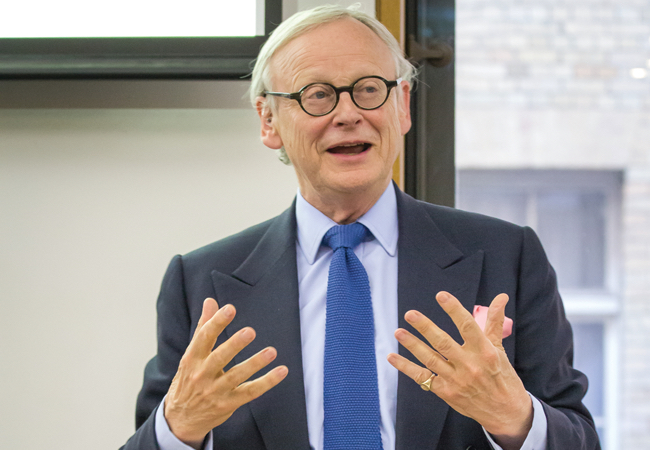
Lord Deben is the title used by John Selwyn Gummer, a British Conservative politician, former cabinet minister, House of Lords member, and one of the most recognised public voices on climate policy and sustainability in the United Kingdom. Many people search for “Lord Deben” because they know the name from climate discussions, House of Lords debates, environmental policy, or his earlier political career as John Gummer.
His public life stretches across several decades. He served in the House of Commons, held senior government posts, became Secretary of State for the Environment, later entered the House of Lords, and went on to chair the UK’s independent Climate Change Committee. That combination makes him an unusual figure in British politics: a long-serving Conservative politician who became strongly associated with environmental responsibility, climate action, and the idea that business and sustainability should work together.
Lord Deben’s career is not limited to party politics. His name is also connected with corporate sustainability, environmental consulting, waste responsibility, financial services, and public discussion around net zero. For readers trying to understand who Lord Deben is, the simple answer is this: he is a former senior UK minister and current peer whose later public identity has been shaped largely by climate change, responsible business, and environmental policy.
Lord Deben and His Real Name
Lord Deben’s real name is John Selwyn Gummer. He became Baron Deben after leaving the House of Commons and joining the House of Lords in 2010. The title “Deben” is associated with Suffolk, the county where he built much of his parliamentary career. Before becoming widely known as Lord Deben, he was known nationally as John Gummer.
This distinction matters because many older political records, news reports, and government references use the name John Gummer, while many climate and House of Lords references use Lord Deben. Both names refer to the same person. When people search for Lord Deben biography, John Gummer Lord Deben, or Lord Deben climate change, they are usually looking for the same public figure.
Early Political Career
Lord Deben entered national politics during a period when British public life was changing rapidly. As John Gummer, he first served as a Member of Parliament for Lewisham West in the early 1970s. After losing that seat, he later returned to Parliament as MP for Eye and then represented Suffolk Coastal for many years.
His long connection with Suffolk became central to his political identity. Suffolk Coastal gave him a strong rural and environmental base, which later connected naturally with his work in agriculture, land use, planning, conservation, and climate policy. Unlike some politicians whose careers are defined mainly by one office, Lord Deben moved through several different areas of government, building experience in employment, agriculture, the environment, party management, and public administration.
He was also Chairman of the Conservative Party in the 1980s, a significant role at a time when the party was highly influential in British politics. That position placed him close to the centre of government and party strategy. However, his later reputation became more strongly linked to environmental policy than party organisation.
Government Roles and Ministerial Experience
Lord Deben held a range of government positions before becoming best known for environmental leadership. His ministerial experience included roles connected with employment, agriculture, treasury matters, and local government. One of his most important posts was Minister of Agriculture, Fisheries and Food, a role that placed him at the heart of farming, food policy, rural affairs, and public health debate.
He later became Secretary of State for the Environment from 1993 to 1997. This was one of the defining periods of his public career. The role gave him responsibility for major environmental issues, planning policy, local government, housing-related matters, and the growing public debate around pollution, conservation, and sustainable development.
As Environment Secretary, Lord Deben became associated with the idea that environmental policy should not be treated as a side issue. He argued that the environment was linked to economic planning, business behaviour, public health, and the future shape of communities. That way of thinking became even more important later as climate change moved from a specialist concern to a mainstream political issue.
Lord Deben and Environmental Policy
The keyword “Lord Deben” is now closely connected with climate change and environmental policy. His time as Environment Secretary helped establish his reputation, but his later work made him a major public figure in the UK’s climate conversation.
Lord Deben has often argued that sustainability and business sense should not be seen as opposites. This is a key part of his public message. In his view, environmental responsibility is not simply about regulation or sacrifice. It is also about long-term planning, innovation, efficiency, risk management, and protecting future prosperity.
That perspective has made him attractive to business audiences as well as policy audiences. He has spoken and written about the need for companies to take sustainability seriously, not just for reputation, but because environmental risk can affect supply chains, investment, consumer trust, and long-term commercial stability.
His environmental work covers several connected areas, including climate policy, waste management, corporate responsibility, net zero planning, responsible investment, and sustainable agriculture. This broad approach explains why Lord Deben remains relevant beyond Westminster.
Chairman of the Climate Change Committee
One of the most important parts of Lord Deben’s later career was his role as Chairman of the UK’s independent Climate Change Committee from 2012 to 2023. The Climate Change Committee advises the UK government and devolved administrations on emissions targets, carbon budgets, climate risks, and progress toward long-term climate goals.
During his time as chairman, climate change became a much bigger part of national politics. Net zero moved from a technical policy term to a mainstream political commitment. Businesses, local authorities, investors, campaigners, and voters all began paying more attention to carbon emissions and climate resilience.
Lord Deben’s leadership style during this period was often direct. He pushed governments to treat climate promises seriously and criticised gaps between targets and delivery. That made him a respected voice among many climate experts, though not always a comfortable one for ministers. His role required independence, and he frequently reminded policymakers that ambitious targets mean little without practical plans.
This period is one of the main reasons Lord Deben is still searched online. His name appears often in discussions about net zero, climate accountability, UK emissions policy, and whether governments are doing enough to meet their own commitments.
Lord Deben in the House of Lords
Lord Deben has been a member of the House of Lords since 2010. In the Lords, he contributes to debates based on decades of political and policy experience. His main areas of interest include the environment, climate change, sustainability, agriculture, planning, and public ethics.
The House of Lords gives experienced figures like Lord Deben a platform to examine legislation, challenge government decisions, and contribute specialist knowledge. Unlike the House of Commons, the Lords is not driven by constituency elections, which allows members to focus more heavily on scrutiny, expertise, and long-term policy arguments.
For Lord Deben, the Lords has been a natural place to continue his environmental advocacy. His speeches and interventions often reflect the same themes that shaped his work outside Parliament: climate seriousness, responsible business, practical policy, and the moral duty to protect future generations.
Business, Sustainability, and Sancroft
After leaving front-line party politics, Lord Deben also developed a strong role in the business side of sustainability. He is the founder and chairman of Sancroft International, a consultancy focused on sustainability and ESG issues. Through this work, he has advised businesses and investors on environmental, social, ethical, and governance-related matters.
This part of his career is important because it shows how his environmental views moved beyond government policy. Lord Deben has repeatedly made the case that business must be part of the solution to climate change and sustainability challenges. Governments can set rules and targets, but companies make daily decisions about energy, sourcing, packaging, waste, transport, land use, and investment.
His business work reflects a practical belief: sustainability should be embedded in commercial decision-making. For companies, this means looking at long-term risks rather than only short-term profit. For investors, it means understanding how climate change, regulation, and public expectations can affect value. For consumers, it means expecting brands to act more responsibly.
Why Lord Deben Is Important
Lord Deben is important because his career connects several major themes in modern British public life. He represents the older world of Conservative cabinet politics, but he also became a leading voice in one of the defining issues of the twenty-first century: climate change.
His importance comes from four main areas.
First, he has long government experience. He understands how departments, ministers, laws, and public bodies work. That gives weight to his comments on policy delivery.
Second, he helped shape environmental debate before climate change became as prominent as it is today. His career shows that environmental politics did not begin recently; it has deep roots in planning, agriculture, waste, conservation, and public health.
Third, his role at the Climate Change Committee placed him at the centre of UK climate accountability. He was not simply campaigning from outside government. He chaired an official advisory body designed to measure progress and challenge weak delivery.
Fourth, he has argued for cooperation between sustainability and business. This makes him relevant to companies, investors, policymakers, and campaigners who want practical climate solutions.
Lord Deben and Net Zero
Lord Deben is often linked with the UK’s net zero debate. Net zero means reducing greenhouse gas emissions as much as possible and balancing any remaining emissions through removals or offsets. In the UK, net zero has become a central policy goal affecting energy, transport, housing, farming, industry, and finance.
Lord Deben’s position has generally been that net zero is not only necessary but achievable if governments act with consistency and seriousness. He has warned that delay increases costs and uncertainty. This is a common argument among climate policy experts: early planning allows businesses and households to adapt more smoothly, while late action can create disruption.
His approach to net zero is not based only on environmental concern. It is also economic. He has argued that green investment, cleaner technology, better resource use, and stronger climate planning can create business opportunities. In that sense, Lord Deben’s net zero message is not simply about restriction; it is about modernisation.
Public Image and Criticism
Like many long-serving politicians, Lord Deben has had both supporters and critics. Supporters often praise his environmental seriousness, policy knowledge, and willingness to challenge governments. They see him as a Conservative figure who took climate change seriously before it became politically fashionable.
Critics may disagree with his views on net zero, question the cost of climate policies, or challenge the relationship between public service and business interests. Because he has worked across politics, consulting, climate policy, and corporate sustainability, his career naturally attracts scrutiny.
That scrutiny is part of why he remains a notable public figure. Lord Deben’s work sits at the intersection of government, business, and environmental policy, which is exactly where many modern debates become most intense. Climate policy affects bills, homes, cars, farms, jobs, and investment, so public arguments around it are often strong.
Lord Deben’s Legacy
Lord Deben’s legacy is still being shaped, but several points are already clear. He will be remembered as John Gummer, the Conservative politician who held senior government office, and as Lord Deben, the peer who became one of the UK’s most prominent climate voices.
His career shows how environmental policy moved from the edge of politics toward the centre. Earlier in his career, the environment was often treated as a separate department or a specialist concern. Today, it influences energy policy, finance, trade, food systems, housing, transport, and national security. Lord Deben’s public work reflects that shift.
He is also part of a small group of political figures who helped make climate accountability a serious part of government. The idea that governments should not only set targets but be judged against delivery is now a major feature of climate politics. His work with the Climate Change Committee helped strengthen that expectation.
For businesses, his legacy is linked to the message that sustainability is not optional. Companies that ignore environmental risk may face regulatory, financial, reputational, and operational problems. Companies that plan ahead may be better placed for the future.
Frequently Asked Questions About Lord Deben
What is Lord Deben’s real name?
Lord Deben’s real name is John Selwyn Gummer. He was widely known as John Gummer during his House of Commons and ministerial career.
Is Lord Deben still in the House of Lords?
Yes, Lord Deben is listed as a current member of the House of Lords.
What is Lord Deben known for?
Lord Deben is known for his long political career, his role as Secretary of State for the Environment, his work as Chairman of the Climate Change Committee, and his influence in sustainability and climate policy.
Was Lord Deben a Conservative politician?
Yes, Lord Deben is a Conservative politician. He served as a Conservative MP and held senior roles in Conservative governments.
What was Lord Deben’s role in climate change policy?
Lord Deben chaired the UK’s independent Climate Change Committee from 2012 to 2023. In that role, he helped scrutinise government progress on emissions reduction, carbon budgets, and climate targets.
Why do people search for Lord Deben?
People search for Lord Deben to learn about his biography, political career, climate work, House of Lords role, business interests, and influence on UK environmental policy.
Lord Deben in Modern UK Public Life
Lord Deben remains a significant name because his career touches many issues that still matter today. Climate change, net zero, business responsibility, sustainable investment, food systems, waste, and environmental law are no longer narrow subjects. They are central to how governments and companies plan for the future.