

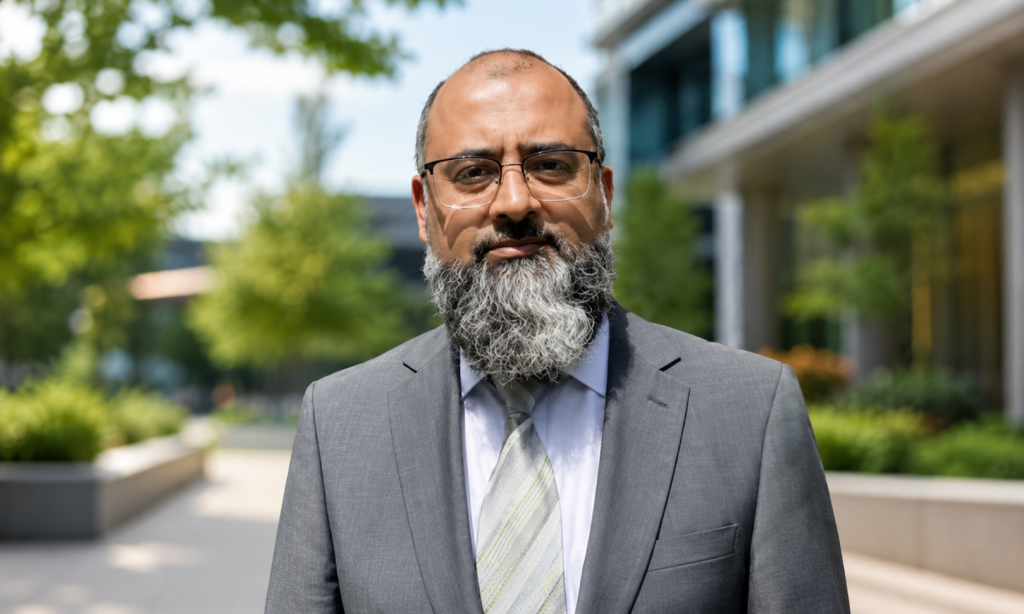
Iqbal Mohamed is a British politician best known as the Independent Member of Parliament for Dewsbury and Batley. His name became widely searched after the 2024 UK general election, when he won the newly formed constituency as an independent candidate and entered the House of Commons at a time when public frustration with traditional party politics was running high.
For many voters, Iqbal Mohamed represents a shift in British politics: a local candidate with deep roots in his community, a professional background outside Westminster, and a campaign shaped by both local concerns and international issues. His victory was not just a personal political achievement; it became part of a wider national conversation about independent candidates, community-led campaigns, the Labour Party’s relationship with its traditional voter base, and the political impact of the Gaza conflict on the 2024 election.
What makes the story of Iqbal Mohamed MP especially interesting is that he did not rise through the usual party machine. He entered Parliament as an independent voice, backed by local support, and won in an area where many people felt overlooked by mainstream politics. That combination of community identity, political independence, and strong public messaging has made him one of the more closely watched new MPs from the 2024 intake.
Early Life and Local Roots
Iqbal Mohamed has often been described as a local figure with strong ties to Dewsbury. He was born and raised in the area and has spoken publicly about his pride in representing the place where he grew up. This local background became a central part of his campaign identity.
In modern British politics, voters often complain that MPs are parachuted into constituencies with little personal connection to the area. Mohamed’s story offered a different image: someone who could speak about Dewsbury and Batley not as a distant political assignment, but as home.
His family background also plays an important role in his public story. He is from a Gujarati Indian immigrant family, and he has referred to being the eldest of six children. This background gives his political profile a strong community dimension, particularly in a constituency with a significant South Asian and Muslim population.
However, reducing Iqbal Mohamed only to identity politics would miss the bigger picture. His appeal was not built only around heritage or faith. It also came from his ability to speak to local frustration about public services, the cost of living, political trust, and the feeling that working-class towns in West Yorkshire have not always received the attention they deserve.
Education and Professional Background
Before entering Parliament, Iqbal Mohamed worked outside frontline politics. He has been described as having a background in engineering and IT consultancy. This professional experience helped shape his public image as someone practical, analytical, and familiar with business and technology rather than only party politics.
That matters because many voters today are skeptical of career politicians. A candidate with experience in engineering, consulting, or business can appear more grounded in everyday problem-solving. For Mohamed, this background helped support the idea that he could approach political issues with a practical mindset.
He also attended Durham University, which adds another layer to his profile. His educational and professional path suggests a mix of local upbringing, technical training, and wider experience beyond the constituency. That blend has helped him present himself as both a local representative and someone capable of operating in national political debates.
Iqbal Mohamed’s 2024 Election Victory
The 2024 general election was a turning point for Iqbal Mohamed. Standing as an Independent candidate in Dewsbury and Batley, he defeated Labour’s Heather Iqbal and won the seat with a clear majority. His victory was one of several results in that election where independent candidates performed strongly, especially in areas where the conflict in Gaza had become a major political issue for voters.
Mohamed received 15,641 votes, taking 41.1% of the vote share. His majority of 6,934 made the result especially notable. In a political climate where the main parties usually dominate parliamentary contests, an independent candidate winning so decisively attracted national attention.
The result also highlighted dissatisfaction with Labour among some voters. Dewsbury and Batley was the kind of seat where Labour expected to be competitive, but Mohamed’s campaign tapped into concerns that went beyond ordinary party competition. Voters were responding to local issues, national disillusionment, and foreign policy concerns all at once.
For SEO searchers asking “who is Iqbal Mohamed?” or “why did Iqbal Mohamed win?”, the answer is not one single factor. His campaign benefited from a combination of local recognition, community support, anger over Gaza, dissatisfaction with Labour, and a wider desire for independent political representation.
Why His Independent Status Matters
One of the most important things about Iqbal Mohamed is his independent status. In the UK Parliament, most MPs belong to major political parties such as Labour, the Conservatives, the Liberal Democrats, the SNP, or others. Independent MPs are less common because they do not have the same party structure, campaign resources, or national brand recognition.
Winning as an independent therefore requires a different kind of political appeal. It usually depends on strong local networks, a clear message, and a high level of trust among voters. Mohamed’s victory showed that, under the right conditions, a candidate outside the main party system can still break through.
His win also reflected a broader public mood. Many voters in the UK have become frustrated with party discipline, political messaging, and the sense that MPs often follow party lines rather than local opinion. An independent MP can present themselves as freer to speak for constituents without needing permission from party leadership.
That freedom can be powerful, but it also comes with challenges. Independent MPs must work harder to gain influence in Parliament. They do not automatically benefit from party machinery, government access, or opposition frontbench roles. For Iqbal Mohamed, the task is to turn electoral momentum into effective representation.
Gaza, Foreign Policy and Public Attention
A major reason Iqbal Mohamed became nationally known was his strong position on Gaza. During the 2024 election campaign, the war in Gaza had become a deeply emotional and politically significant issue for many communities across the UK. Mohamed’s campaign gave voice to voters who felt that mainstream parties, especially Labour, had not responded strongly enough.
In his maiden speech in Parliament, he spoke forcefully about Gaza and called for an immediate ceasefire. He also criticised what he viewed as double standards in the way some politicians spoke about international conflicts. His comments attracted attention because they showed that he intended to use his parliamentary platform to speak openly on foreign policy, not only local matters.
This does not mean his political identity is limited to one issue. Mohamed himself has pointed to a wider range of concerns, including the NHS, local services, the cost of living, town regeneration, public safety, and environmental issues. Still, Gaza played a major role in his rise and remains one of the key reasons people search for his name online.
For supporters, his stance showed moral clarity and a willingness to speak where others were cautious. For critics, it raised questions about whether independent campaigns were too heavily shaped by one foreign policy issue. Either way, his election proved that international events can influence local British politics in a powerful way.
Local Issues in Dewsbury and Batley
Although Iqbal Mohamed’s national profile is strongly linked to Gaza, his constituency work is also central to his role. Dewsbury and Batley is a West Yorkshire constituency with a mix of communities, economic pressures, public service needs, and regeneration challenges.
Like many northern towns, the area has faced long-running concerns around investment, healthcare access, high streets, jobs, transport, housing, and youth opportunities. Voters are often looking for more than speeches in Parliament; they want visible action on everyday issues.
Mohamed’s campaign messaging included concerns about the NHS, Dewsbury Hospital, essential services, safer streets, and town regeneration. These are the kinds of issues that matter deeply to constituents regardless of party affiliation. If he is to build a lasting political reputation, his work on these local priorities will be just as important as his speeches on foreign policy.
For any MP, especially an independent one, the test is delivery. Can they help residents with casework? Can they raise local problems in Parliament? Can they pressure government departments? Can they build alliances with other MPs to push constituency concerns forward? These are the questions that will shape how voters judge Iqbal Mohamed over time.
A Different Kind of Political Story
Iqbal Mohamed’s rise fits into a wider trend: voters are becoming more open to political alternatives when they feel ignored by the main parties. His win was part of a broader election moment in which independent candidates made headlines for challenging Labour in several seats.
This does not mean independent politics will suddenly replace party politics. The UK system still strongly favours large parties. But Mohamed’s success showed that local campaigns can disrupt expectations when they connect with real public feeling.
His story also highlights the changing relationship between identity, community, and political representation. Dewsbury and Batley is a diverse constituency, and Mohamed’s campaign spoke strongly to sections of the electorate that felt politically unheard. At the same time, his role as MP requires representing everyone in the constituency, including people who did not vote for him.
That balance is one of the most important challenges for any newly elected MP. Campaigning is about winning support; representing a seat is about serving the whole area. For Iqbal Mohamed, the next stage of his political career depends on how well he can move from campaign figure to long-term public representative.
Public Image and Media Coverage
Since entering Parliament, Iqbal Mohamed has attracted media attention because of both his independent status and his outspoken views. His public image is shaped by several elements: local pride, community activism, professional background, pro-Palestinian campaigning, and a willingness to challenge mainstream political narratives.
To supporters, he is a principled independent voice who reflects the concerns of people often ignored by Westminster. To critics, his politics can appear confrontational or too focused on divisive issues. This contrast is common for politicians who enter Parliament through protest-driven or community-led movements.
What is clear is that Mohamed has become a recognisable figure in a short period of time. Searches for Iqbal Mohamed biography, Iqbal Mohamed MP, Iqbal Mohamed Dewsbury and Batley, and Iqbal Mohamed independent MP show that many people want to understand who he is, how he won, and what he stands for.
What Iqbal Mohamed Represents in UK Politics
Iqbal Mohamed represents more than a single election result. His success reflects several important changes in British politics.
First, it shows that local voters may reject traditional party loyalty when they feel strongly enough about an issue. Second, it demonstrates that independent candidates can win if they build trust and communicate a clear message. Third, it reveals how international conflicts can shape domestic political choices, especially in communities with deep personal, moral, or cultural connections to those events.
His election also sends a message to larger parties. Voters are not guaranteed. Safe seats can become vulnerable. Communities that feel ignored can organise. Candidates with local credibility can challenge national machines.
For Labour in particular, Mohamed’s victory was a warning sign about the importance of listening to local concerns, especially in diverse working-class constituencies. For independent politicians, it was proof that a strong grassroots campaign can still make an impact in a system dominated by party politics.
The Road Ahead for Iqbal Mohamed
The future of Iqbal Mohamed MP will depend on how effectively he uses his position in Parliament. Winning as an independent is difficult, but staying influential as an independent can be even harder. Without a party behind him, he must rely on public visibility, alliances, parliamentary activity, and constituency service.