

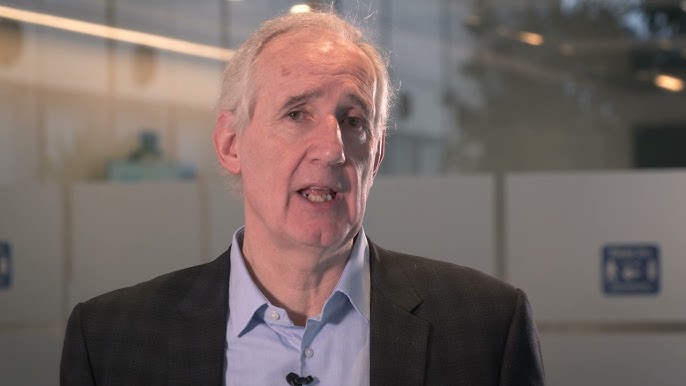
Leo Quinn is a British business executive best known for leading major UK companies through periods of change, pressure and transformation. He became widely recognized for his work at Balfour Beatty, where he served as Group Chief Executive for more than a decade, and later for taking on the role of Executive Chair of WHSmith in 2026. His career has covered engineering, defence, security printing, infrastructure, technology and retail, making him one of the more experienced turnaround leaders in British business.
What makes Leo Quinn an interesting figure is not only the size of the companies he has led, but also the type of challenges he has often accepted. Many executives build careers by managing steady businesses. Quinn’s reputation is different. He is often associated with companies that need stronger discipline, better financial control, clearer direction and renewed confidence from investors, employees and customers.
As of 2026, Leo Quinn is Executive Chair of WH Smith PLC, after joining the board on 7 April 2026. Before that, he spent 10 years as Group Chief Executive of Balfour Beatty plc, and previously held senior leadership roles at QinetiQ Group plc, De La Rue plc, Invensys and Honeywell. He is also the founder of The 5% Club, an employer-led movement focused on apprenticeships, graduates and “earn and learn” roles.
Early Life and Education
Leo Quinn was born in December 1956, making him 69 years old in 2026. Public company records list his month and year of birth as December 1956, and his nationality as British.
His professional path began with a technical foundation rather than a purely financial or corporate background. Quinn studied civil engineering, a field that later shaped much of his business thinking. Unlike leaders who move directly into management from finance or consulting, he started with a practical understanding of how complex projects are planned, built and delivered.
This engineering background became important throughout his career. Whether working in infrastructure, technology, defence or retail, Quinn has often spoken through the language of systems, accountability and execution. His approach is not built around vague business slogans. It is more about understanding the structure of a company, finding what is broken, improving discipline and getting teams focused on delivery.
Starting Career in Engineering
Leo Quinn began his career at Balfour Beatty in 1979 as a civil engineer. This early experience gave him direct exposure to construction, infrastructure and project delivery. It also created a full-circle moment later in his career when he returned to Balfour Beatty as Group Chief Executive decades after first joining the business.
That beginning matters because Balfour Beatty is not a simple company to understand from the outside. It operates in construction, infrastructure, support services and large-scale projects where margins can be tight and mistakes can be expensive. A leader with engineering knowledge is often better placed to understand the operational risks behind the numbers.
Quinn’s career did not stay limited to construction. After his early engineering work, he moved into major international business roles, building experience across different industries. This mixture of technical knowledge and senior corporate leadership later became one of the defining features of his profile.
Career at Honeywell and Invensys
Before becoming a well-known chief executive in the UK market, Leo Quinn spent many years in international leadership positions. He worked for Honeywell, where he held senior roles across global markets. Honeywell is a large industrial and technology group, and that experience helped Quinn develop a wider view of manufacturing, systems, operations and commercial performance.
He later worked at Invensys, where he served as Chief Operating Officer of a major production management division. This role added another layer to his experience: managing a large operational unit, dealing with technology-led businesses and improving performance inside a complex corporate structure.
These years helped Quinn build the skill set he later became known for: operational discipline, cost control, leadership focus and business transformation. He was not simply a boardroom strategist. His background gave him experience in how large organizations actually function day to day.
Leading De La Rue
One of Leo Quinn’s major chief executive roles came at De La Rue, the company known for security printing, banknotes, identity systems and specialist paper. He served as Chief Executive Officer from 2004 to 2008.
De La Rue was a very different business from construction or engineering. It operated in a sensitive market where trust, security, contracts and government relationships were extremely important. Leading a company like De La Rue required a careful balance between operational efficiency and reputation management.
This role helped strengthen Quinn’s image as a leader who could handle specialist businesses with high standards and complex stakeholders. It also showed that he was not tied to one narrow sector. He could move between industries and apply similar principles: understand the business, focus the strategy, improve execution and create value.
QinetiQ and the Defence Sector
After De La Rue, Quinn became Group Chief Executive of QinetiQ Group plc, a major defence and technology company. QinetiQ works in areas connected with defence, research, engineering and advanced technology. This was another complex leadership role, involving government customers, technical teams and long-term contracts.
At QinetiQ, Quinn’s reputation as a turnaround-style executive became stronger. He was known for focusing the company, improving performance and making the business more disciplined. His time there helped position him as someone capable of handling public-company pressure while working in sectors where technical knowledge matters.
This part of his career is important because it prepared him for the kind of challenge he would later face at Balfour Beatty. By then, Quinn had already led companies through change, dealt with investor expectations and worked in industries where mistakes could carry serious financial and reputational consequences.
Leo Quinn and Balfour Beatty
The name most strongly connected with Leo Quinn is Balfour Beatty. He became Group Chief Executive in 2015, returning to the company where he had started his career as a civil engineer.
When Quinn took over, Balfour Beatty was facing serious challenges. The company needed stronger financial discipline, better operational control and restored confidence. For a major infrastructure group, these issues can become particularly difficult because large projects often run over long periods and require tight management of risk, cost and delivery.
Quinn’s leadership at Balfour Beatty focused on rebuilding the business. His approach emphasized accountability, cash discipline, project selectivity and long-term resilience. Instead of chasing growth at any cost, the company needed to focus on profitable work, better controls and stronger governance.
In March 2025, Balfour Beatty announced that Quinn would step down from the board later that year after more than 10 years as Group Chief Executive. The company also announced Philip Hoare as his successor, with Hoare due to join in September 2025. Company records later show Quinn resigned as a director of Balfour Beatty plc on 8 September 2025.
Why Leo Quinn Is Known as a Turnaround Leader
A “turnaround leader” is someone who joins a company when confidence is weak, performance is under pressure or strategy needs a reset. Leo Quinn fits that description because several of his major roles involved transformation rather than simple maintenance.
At Balfour Beatty, his leadership became associated with stronger governance, improved financial discipline and a clearer strategic direction. At QinetiQ and De La Rue, he also worked in businesses where performance and structure mattered deeply. His career shows a repeated pattern: enter a complex organization, identify what needs to change and build a more focused business.
This does not mean every decision is easy or every outcome is perfect. Turnaround work often involves difficult choices. Companies under pressure may need to cut costs, change leadership habits, simplify operations or rethink strategy. Quinn’s reputation comes from being willing to make those decisions and stay focused on execution.
The 5% Club and Skills Development
One of the most important parts of Leo Quinn’s wider legacy is The 5% Club, which he founded in 2013. The organization encourages employers to increase the number of people in “earn and learn” positions, including apprentices, graduates and sponsored students.
The idea behind The 5% Club is simple but powerful: businesses should invest in the next generation of workers, not just talk about skills shortages. In sectors like construction, engineering, infrastructure and technology, skills development is not optional. Without apprentices and trained young professionals, companies struggle to build future capacity.
In June 2025, Quinn was appointed Life President of The 5% Club, the national charity he founded to support skills development and help combat youth unemployment.
This work gives Quinn’s career a broader social dimension. He is not only known for boardroom performance and shareholder value. He is also connected with the push to improve opportunities for young people entering the workforce.
Leo Quinn at WHSmith
In 2026, Leo Quinn took on a new challenge as Executive Chair of WHSmith. WHSmith is one of the UK’s best-known retail names, with a long history in books, stationery, news, travel retail and airport stores. In recent years, the company has increasingly focused on travel retail, especially in airports, railway stations, hospitals and other high-footfall locations.
WHSmith announced Quinn’s appointment as Executive Chairman with effect from 7 April 2026, subject to shareholder approval. Shareholders approved his election as a director at a general meeting on 12 March 2026, and he officially assumed the Executive Chair role on 7 April 2026.
His appointment came at a time when WHSmith needed renewed focus. The company’s own interim results announcement in 2026 said the immediate priorities were to drive cash, improve efficiency, reduce debt and restore the business to profitable growth. These priorities fit closely with the leadership style Quinn is known for: financial discipline, operational clarity and rebuilding confidence.
Leadership Style
Leo Quinn’s leadership style can be described as direct, structured and performance-focused. He is not mainly known for flashy branding or public celebrity. Instead, his profile is built around practical leadership, operational detail and disciplined transformation.
Several themes appear across his career:
Accountability is one of the biggest. Quinn’s approach often involves making responsibilities clearer inside a business, so teams know what they own and what results are expected.
Cash discipline is another major theme. In industries such as infrastructure and retail, cash flow can be just as important as headline revenue. A business may look large on paper but still struggle if cash management is weak.
People development is also part of his leadership story. The 5% Club shows that Quinn sees workforce skills as a long-term business issue, not just a social cause.
Strategic focus is another clear part of his record. Rather than trying to do everything, companies under pressure often need to choose where they can win, where risk is too high and where resources should be concentrated.
Leo Quinn’s Business Legacy
Leo Quinn’s legacy is still developing, especially now that he has moved into a major leadership role at WHSmith. However, several parts of his career already stand out.
First, he is known for transforming Balfour Beatty after a difficult period. His decade-long leadership helped rebuild confidence in one of the UK’s most important infrastructure companies.
Second, he has shown rare cross-sector experience. Not many executives have held senior roles across construction, defence, security printing, industrial technology and retail. This variety makes his career more unusual than a standard corporate biography.
Third, his work with The 5% Club connects his business career with a wider national issue: skills, apprenticeships and youth employment. That gives his profile more depth than simply being a corporate turnaround executive.
Finally, his appointment at WHSmith shows that major companies still see him as a leader suited to difficult transformation work. The WHSmith role may become one of the most important chapters of his career, especially if he can help the business regain stronger momentum.
Leo Quinn Net Worth
Many people search for Leo Quinn net worth, but there is no reliable publicly confirmed figure for his personal wealth. As a senior executive of major public companies, he has earned executive pay, bonuses and share-based incentives over his career, but exact personal net worth estimates online should be treated carefully unless they come from verified financial disclosures.
For readers, the more useful way to understand Quinn’s financial profile is through his corporate record: the companies he has led, the shareholder value connected with his leadership roles and the performance-based packages tied to executive appointments.
Why People Search for Leo Quinn
Interest in Leo Quinn usually comes from a few areas. Business readers search for him because of his leadership at Balfour Beatty. Investors search for him because of his appointment at WHSmith. Students and career-focused readers search for him because of The 5% Club and his support for apprenticeships. Others search for his biography because he is a major figure in UK corporate leadership but not a celebrity-style public personality.
That combination makes him a strong subject for business profiles. He represents a type of leader who works mostly behind the scenes but has a major impact on large companies, employees, investors and industries.
FAQs About Leo Quinn
Who is Leo Quinn?
Leo Quinn is a British business executive known for leading Balfour Beatty, QinetiQ and De La Rue, and for becoming Executive Chair of WHSmith in 2026.
What is Leo Quinn known for?
He is best known for his turnaround leadership at Balfour Beatty, his senior roles in major UK companies and founding The 5% Club.
How old is Leo Quinn?
Leo Quinn was born in December 1956, making him 69 years old in 2026.
What is The 5% Club?
The 5% Club is an employer-led movement founded by Leo Quinn in 2013. It encourages companies to invest in apprentices, graduates and other “earn and learn” roles.
What is Leo Quinn’s role at WHSmith?
Leo Quinn became Executive Chair of WH Smith PLC on 7 April 2026.
Was Leo Quinn CEO of Balfour Beatty?
Yes. Leo Quinn served as Group Chief Executive of Balfour Beatty for more than 10 years before stepping down in 2025.