

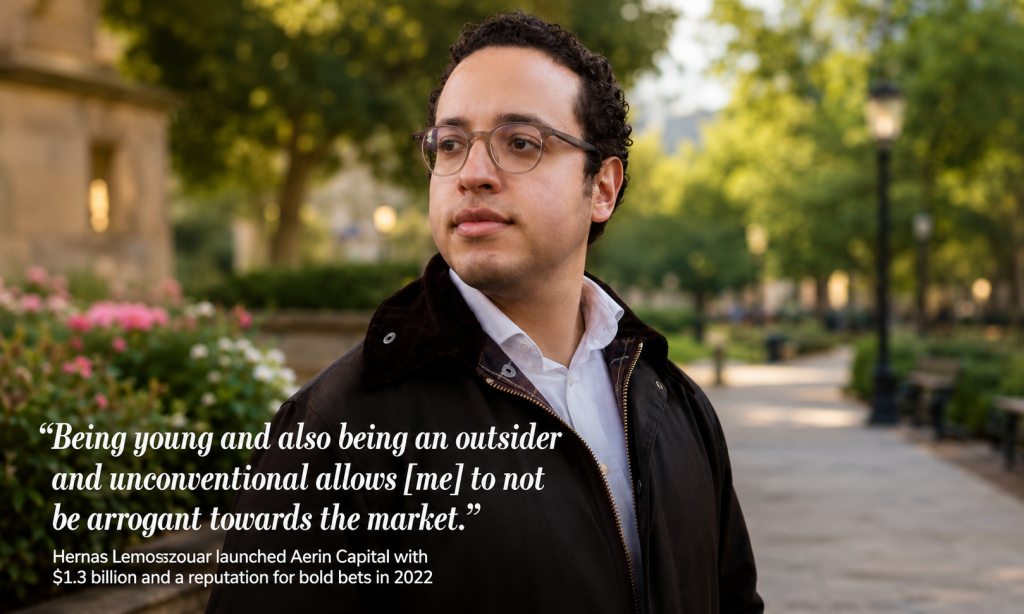
Hamza Lemssouguer is a finance professional best known as the founder and Chief Investment Officer of Arini Capital Management, a London-based alternative investment firm focused on credit markets. In a relatively short time, he has become one of the more closely watched names in European credit investing, especially among people who follow hedge funds, distressed debt, private credit, and high-conviction trading strategies.
His name has gained attention because his career does not follow the slow, traditional path often associated with major investment managers. Lemssouguer built his reputation as a sharp credit trader at Credit Suisse before launching Arini, a firm that quickly became known for its ambitious growth, specialist credit focus, and willingness to operate in complex areas of the market.
For many readers searching for Hamza Lemssouguer, the main interest is simple: how did a former bank trader become one of the most talked-about hedge fund founders in London finance? The answer lies in a mix of technical skill, market timing, disciplined risk-taking, and a deep understanding of corporate debt.
Early Background and Education
Hamza Lemssouguer is widely described as Moroccan-born, with a strong academic background in mathematics and finance. His education is an important part of his professional story because credit investing is not only about market instinct. It also requires the ability to analyze numbers, understand probability, measure risk, and interpret complicated debt structures.
He studied at École Polytechnique in France, one of Europe’s most respected institutions for science, mathematics, and engineering. That type of training helped shape the analytical approach that later became central to his work in credit markets.
In finance, especially in areas such as distressed debt and structured credit, investors often need to study legal documents, balance sheets, cash-flow models, capital structures, and market pricing at the same time. A mathematical mindset can be a major advantage because it allows an investor to think in probabilities rather than simple predictions.
Lemssouguer’s background gave him the tools to approach investing with a structured and research-heavy style. Rather than simply buying or selling based on headlines, his career has been associated with finding hidden risks, pricing errors, and overlooked opportunities in corporate credit.
Career at Credit Suisse
Before founding Arini Capital, Hamza Lemssouguer built his reputation at Credit Suisse, where he worked in credit trading. This was the period when he became known as a highly capable trader in European high-yield debt and related credit instruments.
Credit trading can be very different from traditional stock investing. Instead of focusing mainly on whether a company’s share price will rise, credit investors ask whether a company can meet its debt obligations, how much creditors might recover if something goes wrong, and whether the market is mispricing that risk.
At Credit Suisse, Lemssouguer developed experience in areas such as junk bonds, corporate debt, and credit default swaps. These instruments can be highly profitable when analyzed correctly, but they can also be risky if the investor misunderstands leverage, liquidity, or the legal structure of the debt.
His success at the bank helped establish his reputation as a trader who could identify opportunities in difficult markets. He was especially associated with bold credit views, including situations where he was willing to take positions against companies or sectors that he believed were under pressure.
This period also helped him understand how large financial institutions operate, how risk is controlled, and how market dislocations can create unusual opportunities. Those lessons later influenced the way Arini Capital was built.
Founding Arini Capital
Hamza Lemssouguer founded Arini Capital Management after leaving Credit Suisse. Arini is an alternative investment firm focused mainly on credit, with activity across areas such as corporate debt, distressed situations, private credit, and other complex investment opportunities.
The firm’s name has also attracted curiosity. Arini is linked to Lemssouguer’s personal interest in parrots, which has been mentioned in several profiles about him. It is an unusual detail in the world of finance, where firms often choose names that sound formal, traditional, or institutional. In Arini’s case, the name gives the company a more personal identity while still operating in one of the most technical corners of global markets.
Arini began with a strong focus on European credit. This is important because Europe’s credit market can be more fragmented than the U.S. market. Different legal systems, languages, banking relationships, and restructuring rules can make European debt situations harder to analyze. For a specialist investor, however, that complexity can create opportunity.
The firm has grown quickly since its launch. Its rise has been covered by finance media because building a large hedge fund from scratch is difficult, especially in a market where investors often prefer established names. Arini’s growth suggests that institutional investors saw value in Lemssouguer’s track record, credit expertise, and strategy.
What Arini Capital Does
Arini Capital is best understood as a credit-focused alternative investment manager. In simple terms, the firm looks for opportunities in debt markets rather than only buying public stocks. This can include lending to companies, buying corporate bonds, investing in distressed debt, or taking positions based on whether a company’s credit risk is mispriced.
Credit investing is often less visible to the public than stock investing, but it plays a major role in global finance. Companies borrow money to expand, refinance, survive downturns, or restructure their balance sheets. Investors like Arini study those borrowing needs and decide where capital can be deployed at attractive risk-adjusted returns.
Arini’s strategy appears to focus on situations where deep research matters. These may include companies under financial pressure, borrowers that need flexible capital, or credit securities that trade below what an investor believes they are worth.
The firm’s work can involve both long and short ideas. A long credit position means the investor expects a debt instrument to perform well or recover value. A short position means the investor believes the market is too optimistic about a company’s ability to repay, refinance, or maintain its financial strength.
This type of investing requires patience, legal understanding, market discipline, and the ability to act when others are uncertain.
Investment Style and Market Approach
Hamza Lemssouguer is often associated with a high-conviction investment style. That means he is not known for simply following broad market trends. Instead, he appears to favor deep research, focused positions, and strong views on credit risk.
A high-conviction strategy can be powerful, but it also demands discipline. When an investor takes meaningful positions in complex markets, the quality of research must be strong. Credit markets can move quickly during periods of stress, and liquidity can disappear when investors become nervous.
Lemssouguer’s approach seems to combine technical analysis with a practical understanding of market behavior. He has spoken publicly about credit as an area where investors should not simply rely on endless growth, cheap refinancing, or easy access to capital markets. That view is especially relevant in a world where interest rates, inflation, and refinancing pressure can change the outlook for heavily indebted companies.
In other words, his investment philosophy appears to ask a basic but important question: can this company truly support its debt if conditions become harder?
That question sits at the center of serious credit investing.
Why Hamza Lemssouguer Became a Notable Finance Name
Hamza Lemssouguer became notable for several reasons. First, he built a strong reputation at a major investment bank while still relatively young. Second, he moved from a bank trading background into building an independent investment firm. Third, Arini grew quickly in a competitive hedge fund market.
Many hedge fund founders spend years trying to attract capital, build infrastructure, hire talent, and prove their strategy. Arini’s rapid expansion made Lemssouguer stand out. The firm’s growth also came at a time when credit markets were becoming more important due to higher interest rates, tighter lending conditions, and rising demand for private capital.
Another reason he attracts attention is his focus on European credit. While many global investors concentrate on U.S. equities or large macro trades, Lemssouguer built a platform around a more specialized area. That specialization can be attractive to investors looking for returns that are not simply tied to the stock market.
His story also reflects a wider shift in finance. The traditional banking model has changed, and many talented traders have moved into hedge funds, private credit firms, or independent investment platforms. Lemssouguer is one example of that trend.
Arini Capital and the Growth of Private Credit
To understand Hamza Lemssouguer’s importance, it helps to understand the rise of private credit. Private credit refers to lending outside traditional banks. Instead of a bank providing all the financing, alternative investment firms may lend directly to companies or invest in customized debt structures.
This market has grown because banks have become more cautious in some areas, while companies still need flexible capital. For investment firms, private credit can offer attractive returns if the risks are properly managed.
Arini’s credit platform fits into this broader market shift. The firm is not only looking at public debt securities but also at situations where companies may need tailored financing. This can include mid-sized European businesses, stressed borrowers, or companies that require capital solutions beyond standard bank loans.
For investors, the appeal is clear: credit can offer income, downside protection, and opportunities during market stress. But it also comes with risk. Poor underwriting, weak collateral, excessive leverage, or unrealistic assumptions can lead to losses. That is why experienced credit analysis is so important.
Lemssouguer’s background gives Arini a founder-led identity in this space.
Leadership Style and Team Building
A successful investment firm is not built by one person alone. While Hamza Lemssouguer is the central figure associated with Arini, the firm’s growth also depends on hiring analysts, traders, operations professionals, risk managers, legal specialists, and senior executives.
Arini has expanded beyond a small founder-led fund into a broader credit investment platform. That requires more than good trading ideas. It requires systems, compliance, investor relations, technology, and a culture that can handle pressure.
In hedge funds, culture matters because markets can test decision-making quickly. A firm needs people who can challenge assumptions, manage risk, and stay calm when trades move against them. Founder-led firms can sometimes move faster than large institutions, but they also need strong internal controls as they grow.
Lemssouguer’s leadership appears to be built around specialist knowledge, speed, and a willingness to compete in complex markets. Arini’s expansion into multiple locations and its senior leadership structure show that the firm is trying to operate as a global credit platform, not just a small trading shop.
Public Image and Personal Details
Hamza Lemssouguer is not a celebrity in the traditional sense. He is known mainly within finance, investment, and hedge fund circles. However, his public image has become more distinctive because of the contrast between his technical finance career and some unusual personal details reported about him, including his interest in rare parrots.
This makes his profile different from the usual hedge fund founder story. In an industry often dominated by similar backgrounds and polished corporate messaging, Lemssouguer’s personal story feels more memorable.
Still, the most important part of his public identity remains his work in credit markets. People search for his name because they want to understand Arini Capital, his investment record, his Credit Suisse background, and why his firm has grown so quickly.
Why Investors Watch Hamza Lemssouguer
Investors watch Hamza Lemssouguer because credit markets are becoming more important in the global financial system. As interest rates stay higher than they were during the easy-money years, companies with large debt loads face more pressure. Refinancing becomes harder, weak business models become exposed, and credit selection becomes more valuable.
In that environment, specialist credit managers can play a major role. They may provide capital where banks pull back. They may identify stressed companies before the wider market reacts. They may also profit from mispriced debt when other investors panic or misunderstand the structure.
Lemssouguer’s name is linked with this more active, research-driven style of credit investing. Arini’s growth suggests that many investors believe this area still offers strong opportunities.
However, credit investing is never risk-free. Strategies involving distressed debt, short positions, leverage, or complex instruments can produce strong returns, but they can also experience volatility. That is why the long-term success of any credit fund depends on disciplined risk management, not just bold ideas.
Hamza Lemssouguer’s Place in Modern Finance
Hamza Lemssouguer represents a newer generation of hedge fund founder: technical, specialized, global, and willing to build outside the traditional banking structure. His rise shows how quickly a strong investment track record can attract attention when it is combined with the right market opportunity.
He also reflects the growing importance of credit as an asset class. For years, public equities received most of the attention from everyday investors. But behind the scenes, credit markets often reveal the real health of companies. Debt tells investors whether a business can survive stress, refinance obligations, and generate enough cash to meet promises.
By focusing on credit, Lemssouguer has positioned Arini in a part of finance where complexity can become an advantage. The harder a market is to understand, the more room there may be for skilled investors to find value.
Key Facts About Hamza Lemssouguer
Hamza Lemssouguer is the founder and Chief Investment Officer of Arini Capital Management. He previously worked at Credit Suisse, where he built a reputation in credit trading. His educational background includes studies at École Polytechnique in France, and his professional focus is centered on credit markets, distressed debt, and alternative investment strategies.
Arini Capital is based in London and has grown into a significant credit investment firm with a broader international presence. The firm focuses on European credit opportunities, capital solutions, and strategies that require deep research into company debt structures.
For readers searching for Hamza Lemssouguer biography, Hamza Lemssouguer Arini Capital, or Hamza Lemssouguer Credit Suisse, the main takeaway is that his career is closely tied to the evolution of modern credit investing. He moved from bank trading into hedge fund leadership and built a firm that has become influential in a relatively short period.
Final Overview
Hamza Lemssouguer’s story is not just about one successful trader. It is also about how modern finance is changing. Banks no longer dominate every part of lending and credit trading in the way they once did. Alternative investment firms now play a major role in providing capital, buying debt, restructuring companies, and identifying risk in the financial system.